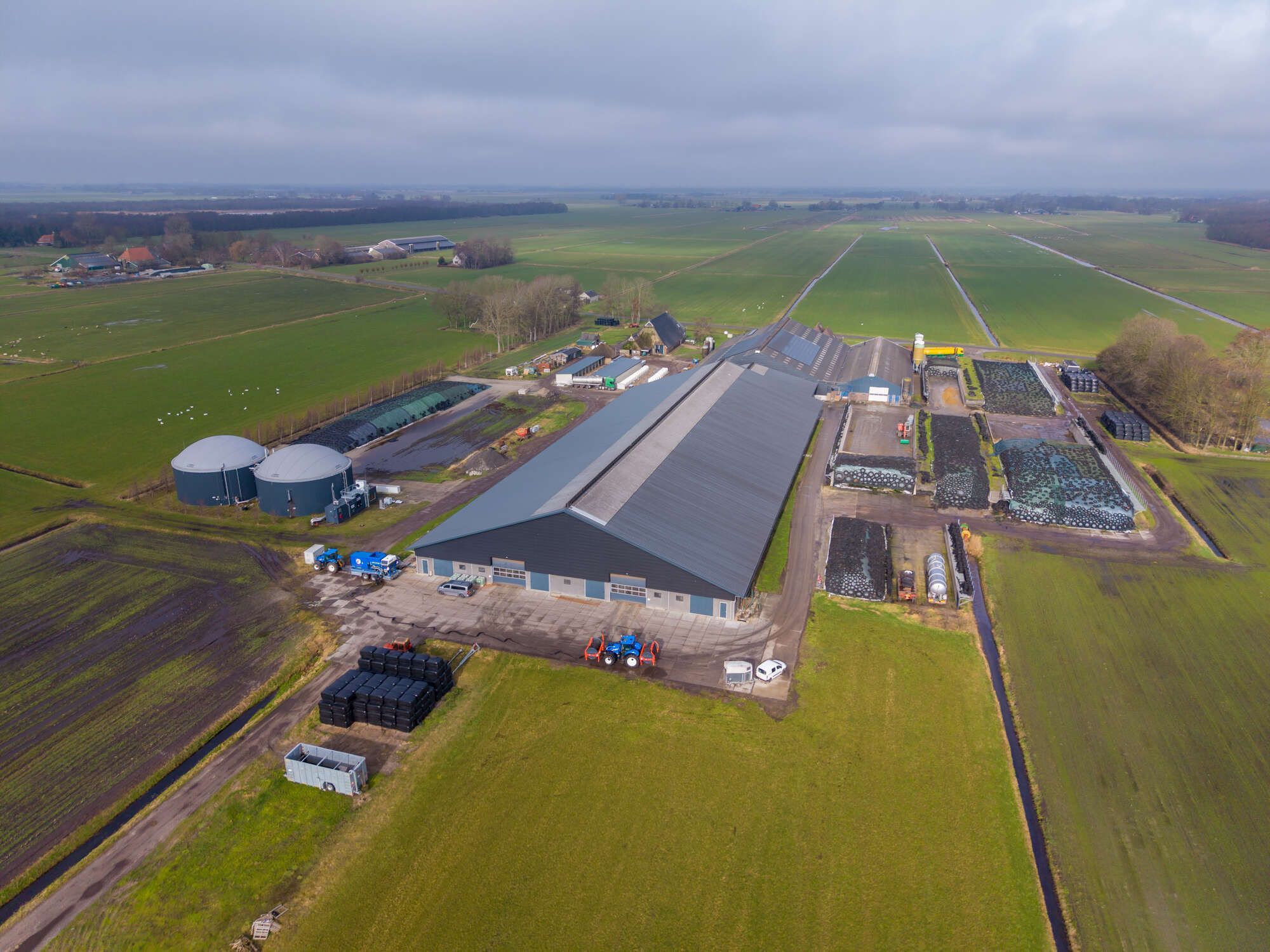
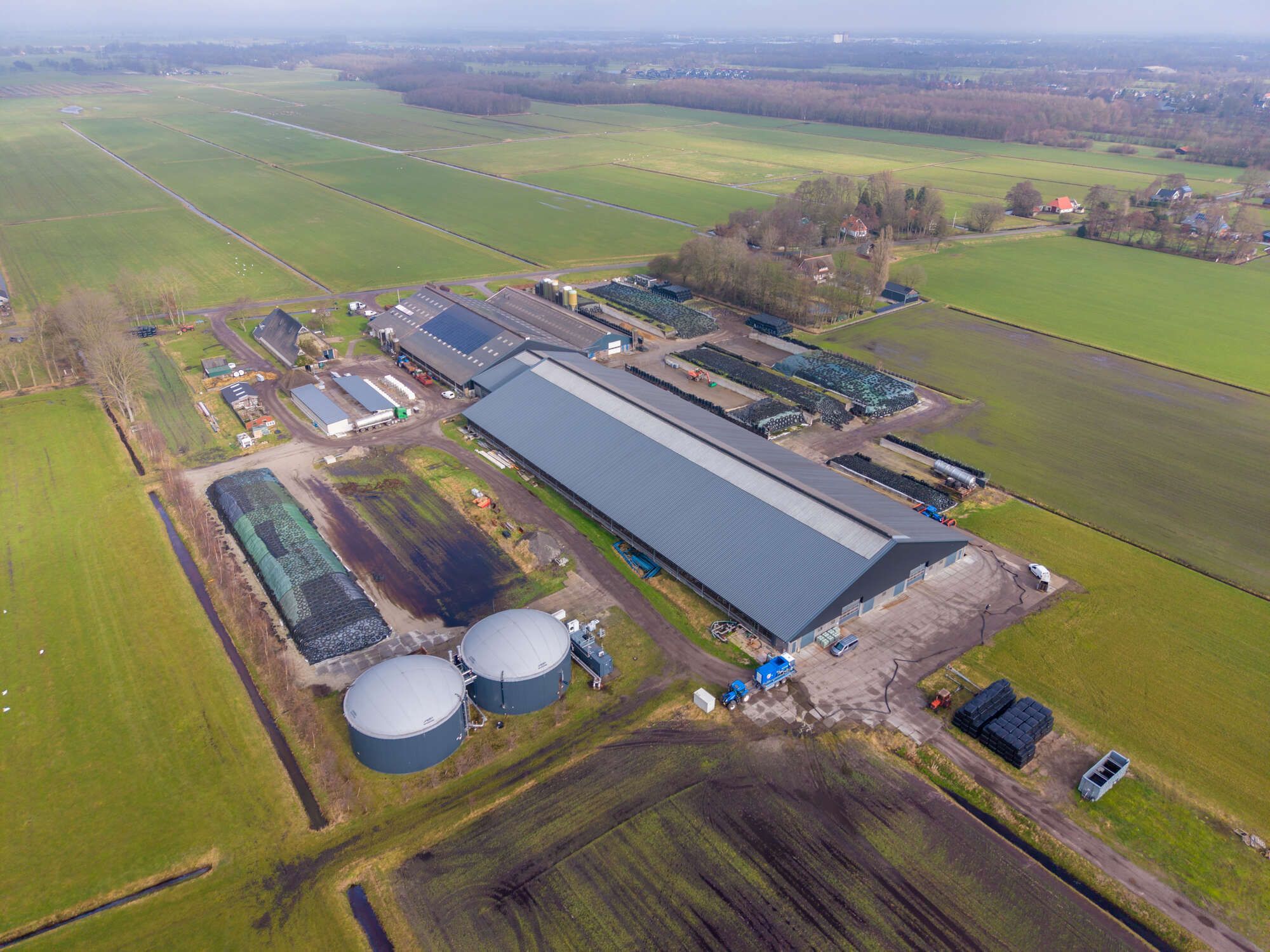
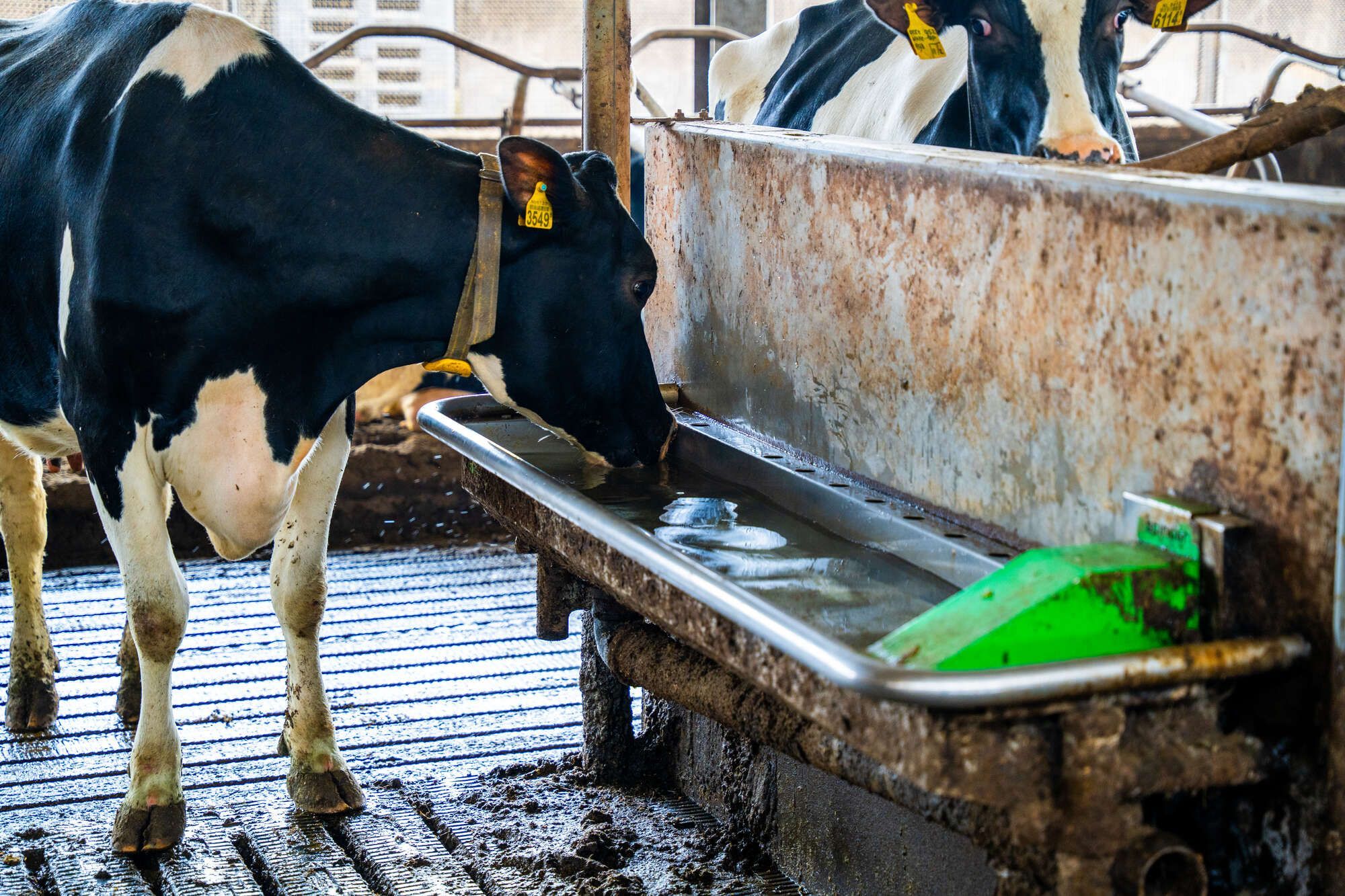
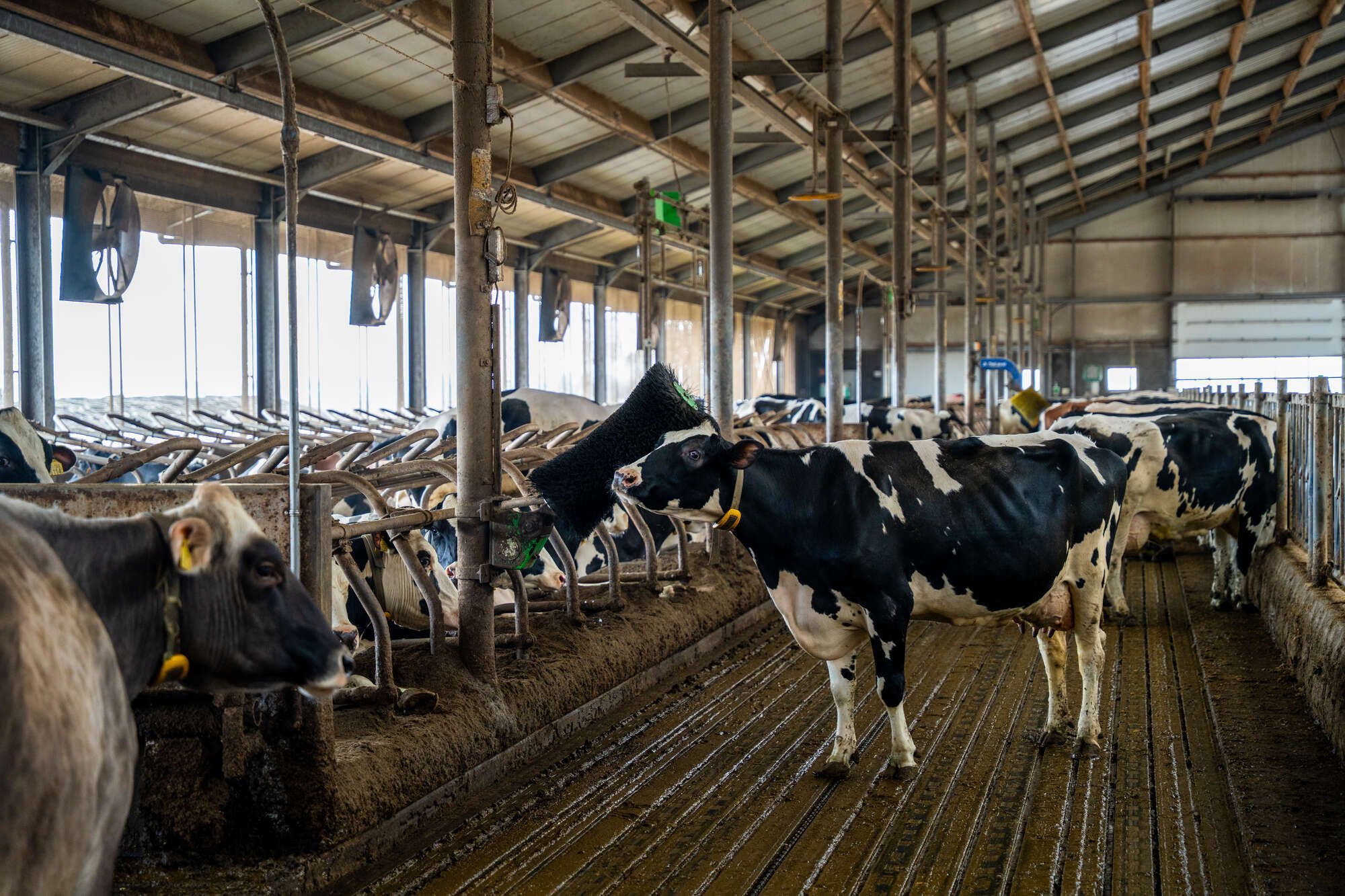
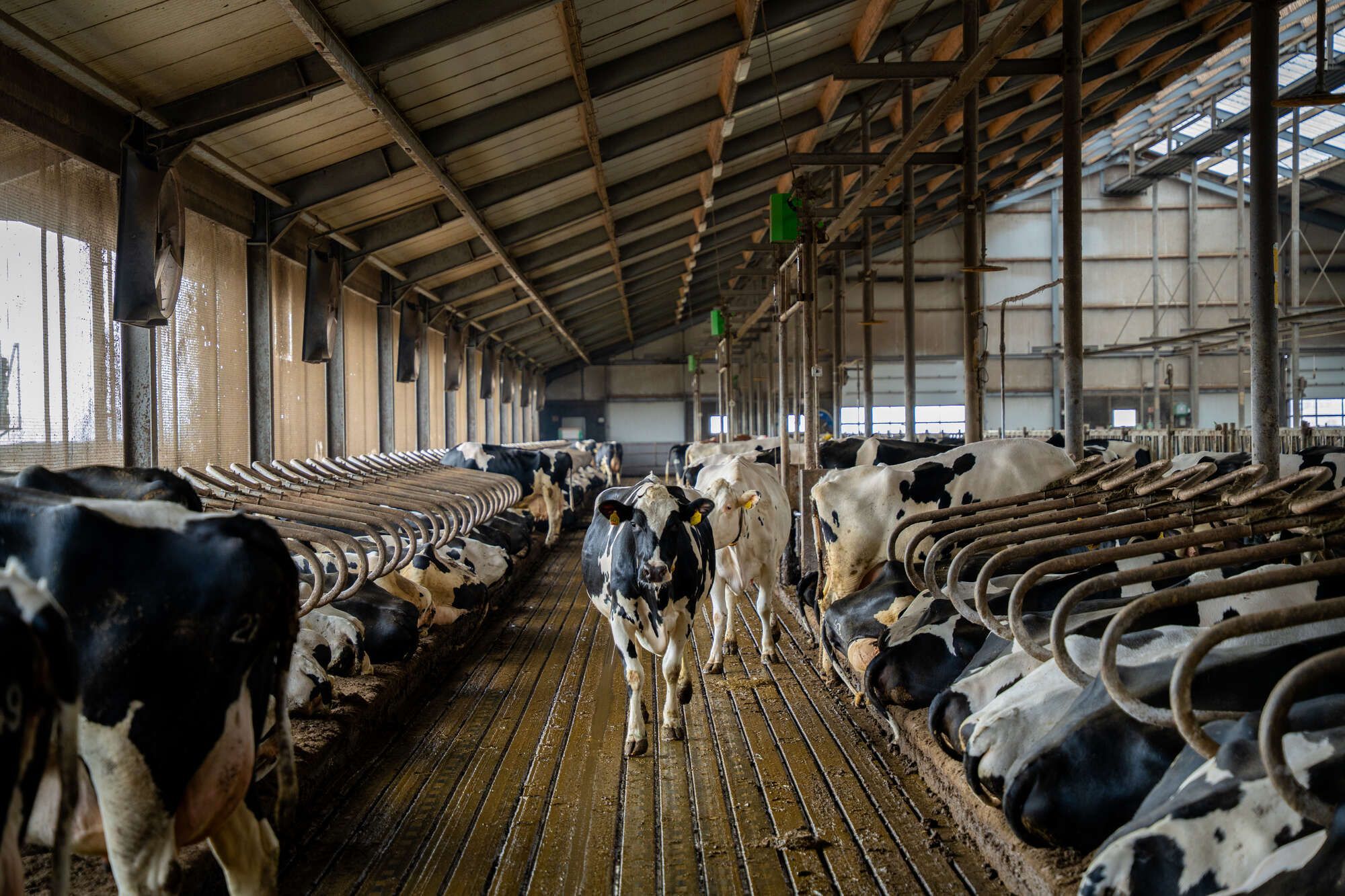
Working efficiently at dairy farm Van der Wal in Boornbergum.
In February 2019, the first cows settled into the new dairy barn of Van der Wal in Boornbergum. This future-proof barn is designed to provide optimal comfort and space while enabling easy and efficient work.
A portion of the 750 dairy cows are milked three times a day in a 2x26 rapid-exit milking parlour, while the remaining cows (about 120) are milked by two milking robots. The cows produce an average of around 12,000 kg of milk per year.
Spinder products in the barn:

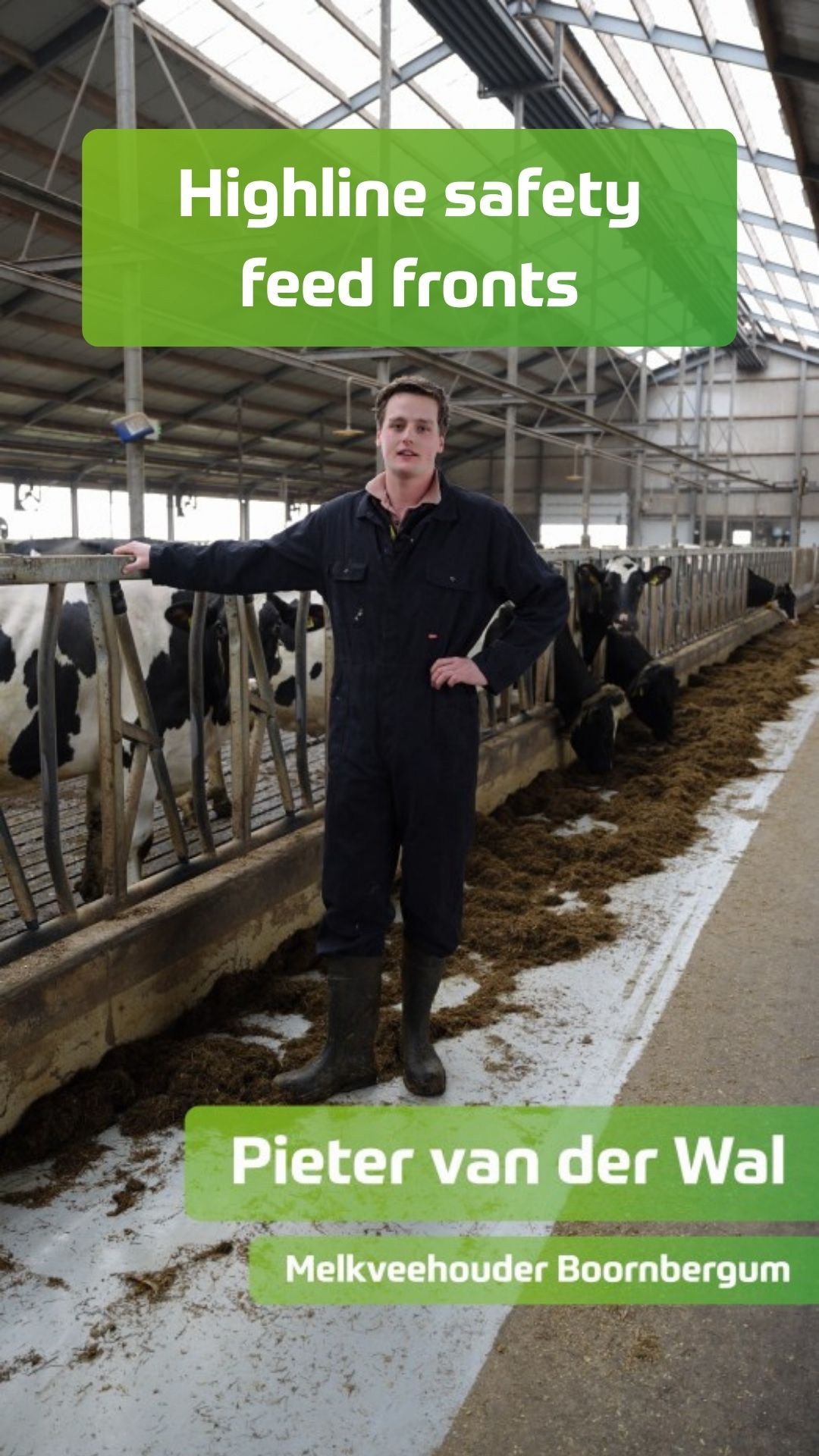
Highline safety feed fronts: individually securing cows
In large dairy farms, it is important for cows to be easily secured individually or in groups.
Why did you choose Highline safety feed fronts?
"We chose the Highline feed fronts because, from our own experience and after looking at other feed fronts, we knew that Spinder feed fronts are maintenance-free."
How do you use the features of the Highline feed fronts?
"After milking, we secure the feed fronts. After half an hour, the feed fronts open again. Additionally, individually securing cows is ideal when we need to scan or implant embryos. We can secure those cows separately, while the rest of the cows can continue eating. This way, we do very little work, and the cows can go about their business."
"The handle is useful when you see a cow in the distance that you want to secure. If you completely flip the handle, you can still catch the cow that way."
What is your experience with the Highline feed fronts?
"There is a lot of peace in the barn because the cows have enough space at the feed front, and there are enough feed fronts."
"We are also happy that the cows do not have spots on their shoulders. They all look good in their coat, no bald patches or anything like that. This shows that they have enough space."
Thanks to the Highline safety feed fronts, cows can be individually secured without disturbing the rest of the group. Additionally, it is possible to secure cows from a distance using the handle, making work in a large barn much more efficient.

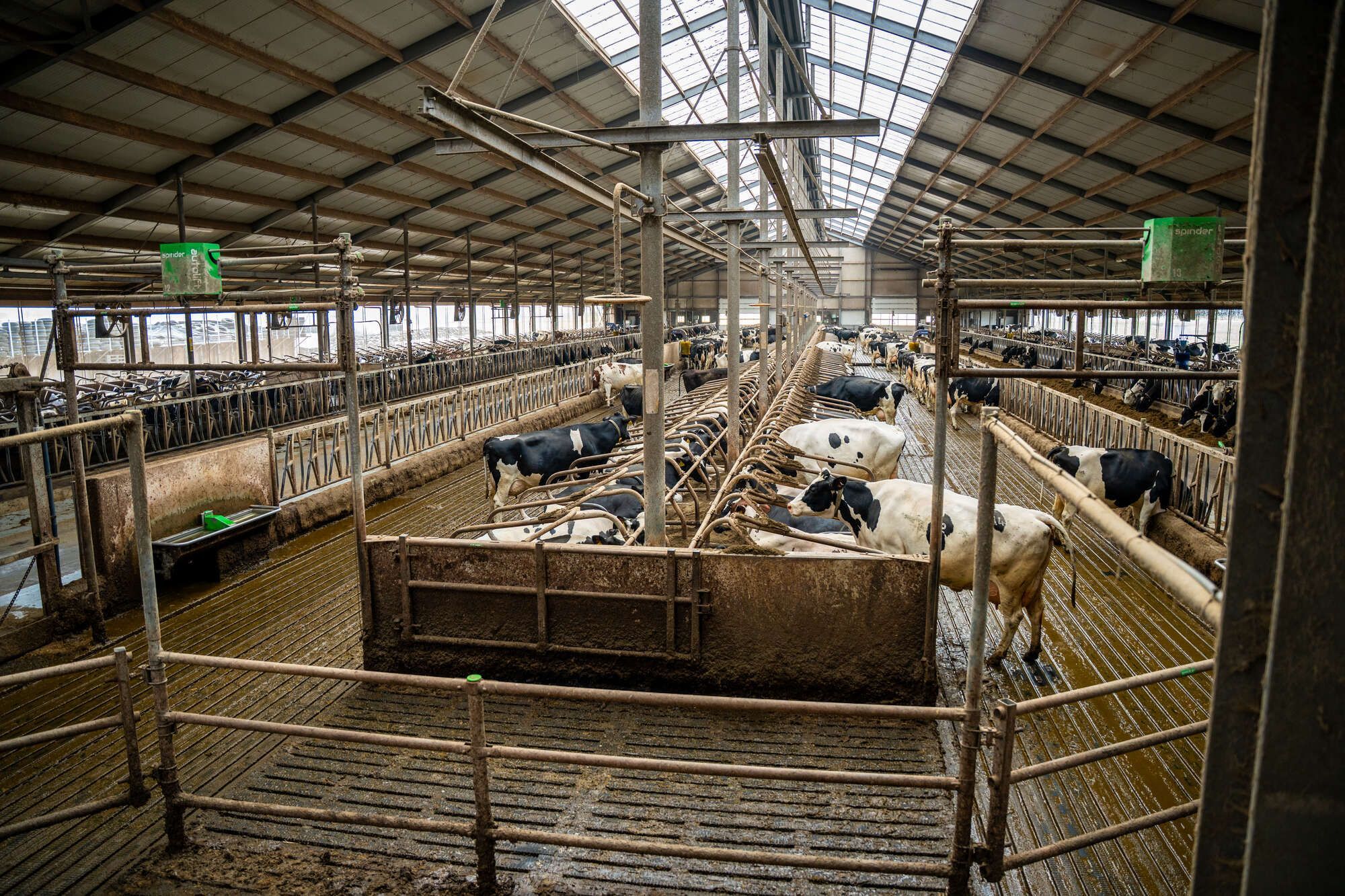
Autolift: efficient cow traffic in a large barn
In large dairy barns, managing cow traffic often takes a lot of time. Automatically operated gates make it possible to easily separate cows or guide them to the correct route from a distance.
When were the Autolifts put into use?
"When the cows moved into the new barn, we used the gates only for cow traffic. After about six months, the motors were added, and we could then remotely control the Autolifts as well."
Why the Autolifts?
"The Autolifts were still new at that time. We were allowed to try them out. Afterward, a few more Autolifts were added."
What do you use the Autolifts for?
"It's ideal for separating the cows from the cubciles after milking, so they stand for half an hour before entering the cubicles. With the remotely controlled Autolifts, we no longer need to walk through the entire barn; we can easily raise all the gates from a distance."
"The gates are used daily to guide the cows along the right path. Or, if you need to lock up a cow, the Autolift gates are also great for that."
"We also use them in the waiting area at the milking robot to separate cows so we can calmly let them go through the robot, for example, with a new heifer or cow."
What are the advantages of the Autolift, in your opinion?
"The automatic opening and closing of the gate is ideal because we don't have to walk through the entire barn anymore. Also, when you are following a cow that you need to stop, you don’t have to walk to the button. You can just stay behind, allowing the cow to calmly move into the space."
"The gates are also animal-friendly. If a cow is underneath when the gate is coming down, it doesn't press on the cow. Once the cow is clear, the gate continues slowly. It works very safely and is also gentle for the cows."
Thanks to the Spinder Autolifts, cattle traffic in the barn and towards the milking robots can be managed efficiently and remotely, saving labor while ensuring calm and safe movements for the cows.

Planning a renovation? Download our free renovation eBook for tips and inspiration!